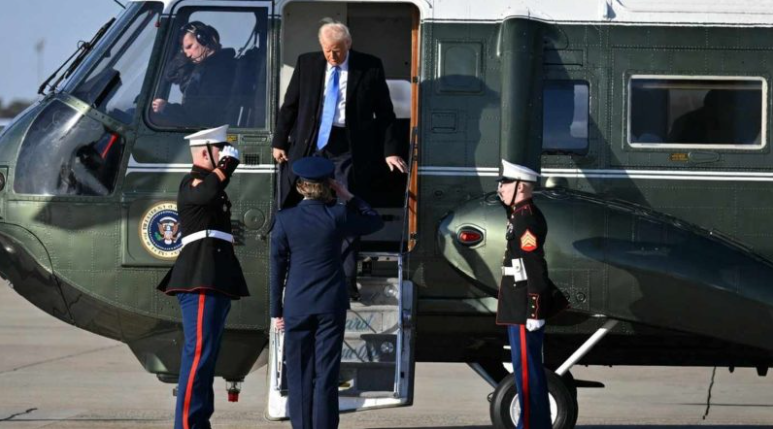
Trump Moves High-Stakes Meeting Back to White House.
President Donald Trump relocated a scheduled Cabinet meeting to the White House on Wednesday, abandoning earlier plans to convene top administration officials at Camp David as negotiations over a potential Iran nuclear agreement advance.
The shift in venue occurs as the administration pursues what Trump characterized as a near-complete phase one agreement to resolve the conflict with Iran. Trump stated that Iranian officials are “negotiating on fumes” and express strong interest in reaching a deal, though he indicated current proposals fall short of administration expectations.
Trump’s Assessment of Negotiations
“So far, they haven’t gotten there, we’re not satisfied with it, but we will be,” Trump said, adding that the alternative involves military action. “Either that or we’ll have to just finish the job. Their navy is gone, their air force is gone, everything’s gone.”
Trump emphasized that preventing Iran from acquiring nuclear weapons represents a priority that transcends domestic political considerations. “I don’t care about the midterms,” Trump stated, asserting that Americans understand the stakes involved in the Iran situation.
Military Actions and Strategic Concerns
U.S. forces conducted defensive strikes against Iranian military targets on Monday, including missile launch facilities and two vessels allegedly engaged in mine-laying operations in the Strait of Hormuz. Former CENTCOM Commander General Joseph Votel characterized the response as an “effective use of military force” that demonstrated swift detection and action capabilities.
Votel suggested that Iran’s reported mining activities indicate Tehran is attempting to increase pressure on Washington during diplomatic discussions. “Clearly the Iranians are trying to hedge their bets here and put more pressure on the U.S.,” Votel said, noting that both military and diplomatic engagement will likely remain necessary.
Structural Complications in Deal-Making
Counterterrorism experts identified significant complications in potential negotiations, pointing to Iran’s supreme leader Mojtaba Khamenei’s status as a “designated target” requiring him to operate covertly. “Khamenei is a designated target, and every confirmed sighting is a coordinate,” terrorism expert Dr. Omar Mohammed explained, indicating that the Iranian leader cannot publicly appear to sign or enforce agreements.
Any finalized arrangement would depend on courier networks for communication, creating what experts describe as an unprecedented diplomatic structure. “This is not arms control as it has been conventionally understood. It is a memorandum signed under American military pressure, with a regime whose leader cannot show his face,” Mohammed said.
Financial Terms and Market Response
Iran is seeking the release of approximately $24 billion in frozen assets as part of a potential agreement, with Iranian media affiliated with the Revolutionary Guard Corps reporting that Tehran wants $12 billion released immediately following a memorandum of understanding. The remaining funds would transfer over a 60-day negotiation period.
Oil markets reflected investor expectations that tensions in the Strait of Hormuz would diminish following U.S. military strikes. Crude oil prices declined to approximately $93.57 per barrel on Tuesday afternoon as financial analysts suggested markets anticipate eventual normalization of shipping conditions despite ongoing Iranian threats.
This story has been updated. CNN’s reporting team contributed to this report.